
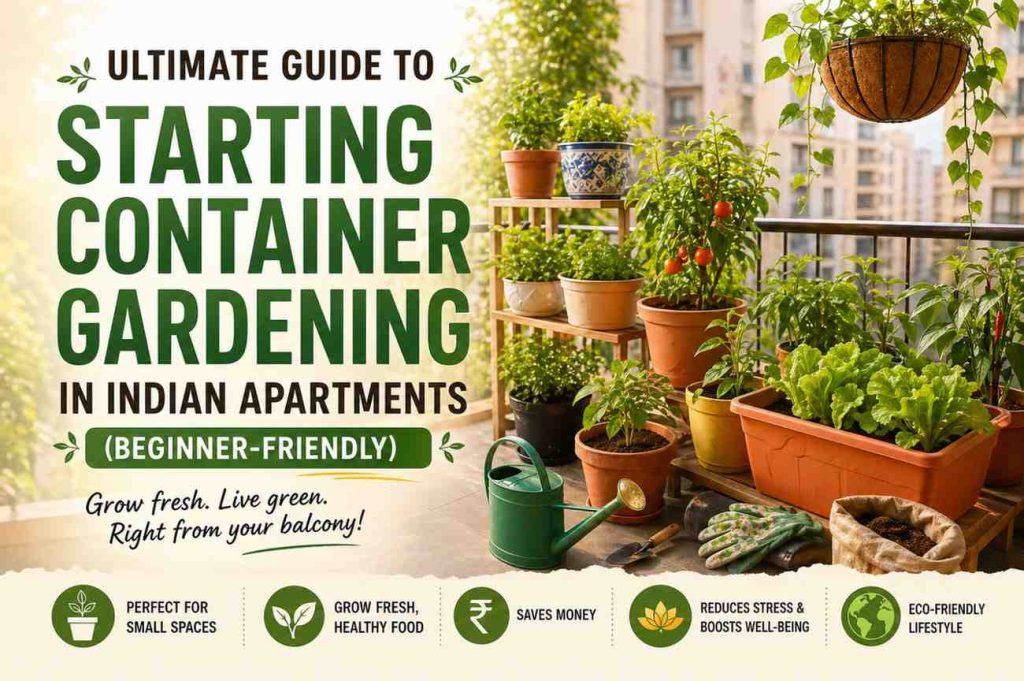
You know that oddly satisfying moment when you pluck fresh mint leaves for chai or grab a handful of coriander for dal… and for once, it doesn’t look like it survived a chemical warfare experiment from the sabzi mandi? Yeah, that. That tiny victory hits harder than it should.
Now imagine doing that from your own balcony. Not your nani’s farmhouse. Not some influencer’s suspiciously perfect terrace. Your slightly dusty, questionably utilized apartment balcony in a city like Delhi, Mumbai, or Bengaluru—where the air feels like it’s been personally offended by your lungs.
Urban life is loud, fast, and mildly chaotic. Between rising stress levels, food safety paranoia (“why is this tomato so shiny?”), and the general concrete jungle aesthetic, people are turning to something unexpectedly wholesome: growing their own food. Container gardening is basically the apartment-friendly version of farming—minus the tractor, plus a lot more WhatsApp research.
So what exactly is container gardening? It’s exactly what it sounds like: growing plants in pots, buckets, grow bags, or anything that can hold soil and your hopes. No backyard? No problem. No permanent space? Still fine. It’s flexible, mobile, renter-friendly, and lets you control soil, water, and sunlight like a slightly obsessive plant parent.
And the benefits? Oh, just a casual list of life upgrades:
- Fresh, chemical-free herbs and vegetables
- Lower grocery bills (yes, your wallet can relax a bit)
- Better air quality (your plants doing more than your air purifier, awkward)
- Aesthetic glow-up for your sad balcony
- A surprisingly effective stress-relief hobby
- A tiny but meaningful step toward sustainable living
This guide is here to take you from “I once killed a money plant” to “look at my thriving balcony jungle.” We’ll walk through everything—planning, setup, planting, maintenance, and even how to deal with India-specific chaos like scorching summers, moody monsoons, pollution, and water shortages.
Thesis (because we’re fancy like that):
This ultimate beginner-friendly guide walks you through every step to create a productive, beautiful container garden in your Indian apartment—even on the smallest balcony or windowsill.
Is this for you? (Be honest)
If you check even two of these, congratulations—you’re qualified:
- You live in an apartment with limited or zero outdoor space
- You’ve never gardened before (or your plants have trust issues because of you)
- You want fresh herbs/veggies without questioning your life choices
- You have 10–20 minutes a day to pretend you’re responsible
- You like the idea of a greener, calmer living space
If you checked none of these… why are you here? No seriously, I’m curious.
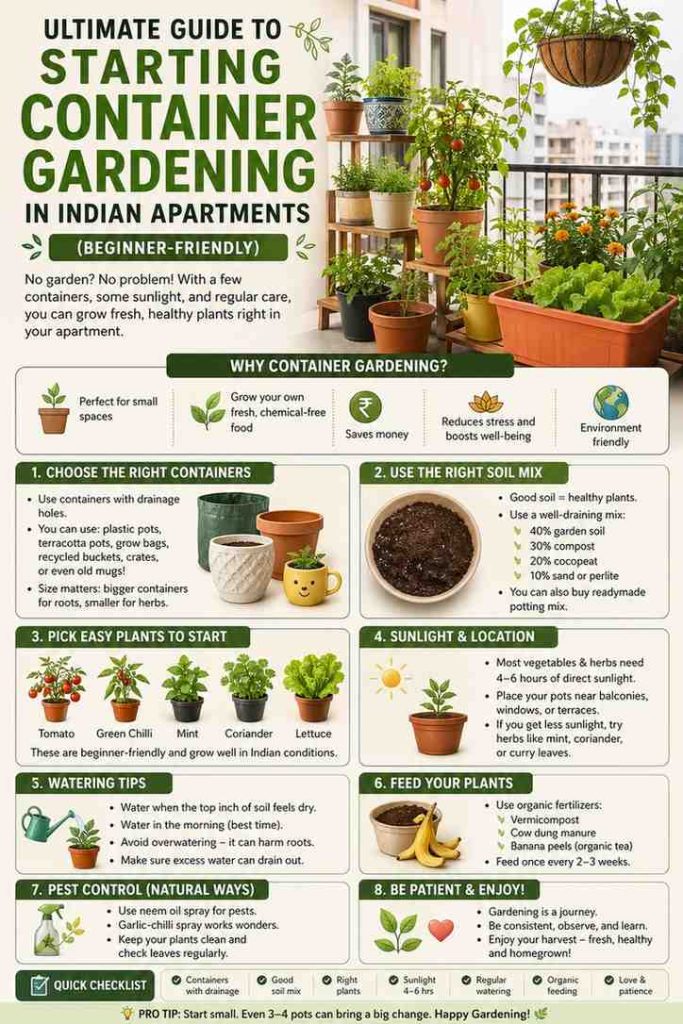
Why Container Gardening Works Wonders in Indian Apartments
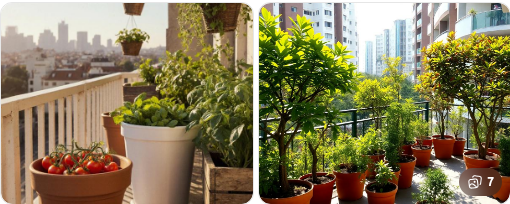
Let’s address the obvious: your balcony is probably the size of a yoga mat, your building is tall enough to argue with clouds, and the wind occasionally tries to relocate your furniture. Not exactly “lush farm vibes.”
In cities like Delhi or Mumbai, most apartment balconies clock in under 50 sq ft. Add heat that feels personal, inconsistent water supply, and the minor inconvenience of… no actual ground—and suddenly gardening sounds like a hobby for people with villas and emotional stability.
Except container gardening doesn’t care about any of that.
Because everything happens in pots, you’re not dependent on land. You can rearrange plants like furniture (finally, something you’ll commit to moving regularly), shield them from harsh sun or wind, and control exactly how much water and nutrients they get. High-rise? Fine. Tiny balcony? Still fine. Even a windowsill can host herbs that’ll judge your cooking less than I do.
And here’s where India gives you an unfair advantage: you can grow something almost year-round. With a little seasonal adjustment—leafy greens in winter, tomatoes and chilies in summer—you’re basically running a micro-farm. Plus, local materials like मिट्टी (soil), cocopeat, old buckets, and grow bags are cheap and easy to find. This isn’t a Pinterest fantasy; it’s very doable.
People across Bengaluru, Delhi, and Mumbai are already doing it—harvesting tomatoes, green chilies, curry leaves, and herbs from balconies that used to hold exactly one broken chair and existential dread.
There’s also the environmental angle (yes, we’re being responsible adults now). Growing your own food reduces your carbon footprint, cuts down on plastic-heavy grocery runs, and—if you compost kitchen waste—turns your potato peels into something more useful than guilt. Bonus: flowering plants attract pollinators like bees, which, unlike most people, are actually helpful.
The real trick, though, is mindset. You don’t need 50 pots and a YouTube channel. Start with two or three plants. Mess up a little. Learn. Container gardening is forgiving, flexible, and scalable—basically the opposite of your last “I’ll wake up at 5 AM” phase.
Planning Your Container Garden: Assess Your Space and Goals
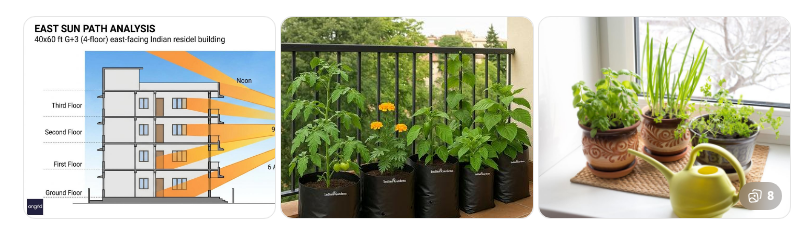
So before you sprint off to buy 17 pots and emotionally commit to becoming a “plant person,” let’s do something radical: look at your actual space. I know, devastating.
Start with the basics. Measure your balcony, terrace, or windowsill—yes, with a measuring tape, not vibes. Most apartment balconies are tiny, so every inch matters. Then figure out sunlight. Plants are picky, unlike you when ordering food at 1 AM.
- Full sun: 6+ hours (ideal for tomatoes, chilies)
- Partial sun: 3–6 hours (herbs, leafy greens)
- Shade: <3 hours (mint, spinach, your motivation)
Orientation matters too. South-facing balconies in India usually get the most consistent sunlight, while north-facing ones are… let’s say “low-energy.”
Now, the India-specific chaos:
- Summers? Brutal. Afternoon sun can roast plants like papad—use shade nets or shift pots.
- Winters (especially in Delhi)? Shorter days = slower growth.
- Monsoons? Great for drama, terrible for overwatering and fungal issues.
Also, check wind patterns. High-rise balconies in Mumbai or Bengaluru can feel like your plants are auditioning for a survival reality show. Use heavier pots or wind barriers if needed.
And please—this is important—consider weight limits. Wet soil is heavy. Your building was not designed for your sudden farming ambitions. Don’t turn your balcony into a structural engineering case study.
Define Your Goals (a.k.a. Why Are You Doing This?)
Be honest. Are you here to:
- Grow kitchen staples (tomatoes, coriander, chilies)?
- Create a pretty balcony with flowers?
- Do a mix of both (ambitious, but acceptable)?
- Or cultivate something spiritual like Tulsi so your relatives finally respect you?
Your goal decides everything—what you grow, how much effort you’ll put in, and how quickly you’ll give up.
Budget Planning (Don’t Panic)
You don’t need to remortgage your life.
- Starter setup (₹500–₹2000):
Basic pots/grow bags, soil mix, a few seeds/seedlings - Mid-range (₹2000–₹5000):
Better containers, tools, maybe a watering can that doesn’t look like it survived 2003 - Nice-to-have extras:
Trellises, vertical stands, fancy planters you’ll pretend were “necessary”
Start cheap. You’re testing a habit, not launching a startup.
Time Commitment (Relax, It’s Not a Child)
- Daily watering: 5–10 minutes
- Weekly maintenance: pruning, checking pests, mild existential reflection
If you can scroll Instagram for an hour, you can keep a plant alive. The bar is low, and yet…
Practical & Legal Stuff (The Boring but Important Part)
Some apartments have rules about:
- Water dripping onto neighbors (they get weird about that)
- Heavy loads on balconies
- Hanging planters outside railings
Check first. Avoid becoming “that tenant.”
Design Ideas (Because Aesthetic Matters, Apparently)
You don’t need chaos. Pick a theme:
- Indian kitchen garden: coriander, mint, curry leaves, chilies
- Vertical jungle: maximize space with shelves and hanging pots
- Companion planting: grow plants that help each other (yes, plants have better relationships than most people)
Start small, keep it simple, and expand once you’ve proven you can keep at least one plant alive for more than a week. Low bar. I believe in you… cautiously.
Choosing the Right Containers and Pots
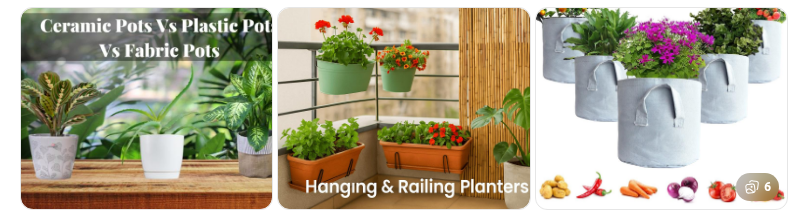
This is where most beginners sabotage themselves with impressive efficiency. You buy a cute tiny pot, stick a tomato plant in it, and then act surprised when it grows like it has abandonment issues. Pots are not decorative suggestions—they’re your plant’s entire universe. Choose wisely.
Key Factors (a.k.a. Things You’ll Ignore Once, Then Never Again)
1. Size matters. A lot.
Plants need root space like you need Wi-Fi—without it, everything slows down and gets ugly.
- Herbs: 6–8 inches deep
- Leafy greens: 8–10 inches
- Tomatoes/chilies: 12–18+ inches
- Root vegetables: deep containers (carrots don’t enjoy hitting concrete halfway)
Too small = stunted growth, sad leaves, and your confidence taking another hit.
2. Drainage holes (non-negotiable)
If your pot doesn’t have holes, it’s not a planter—it’s a bathtub for root rot. Water needs to escape, especially during Indian monsoons, unless you’re trying to recreate a swamp ecosystem.
3. Material, weight, and heat
Your container affects moisture retention, temperature, and whether your balcony collapses under ambition.
Materials Breakdown (India Edition)
Terracotta / Clay Pots
Classic, breathable, and aesthetically pleasing. Also heavy and dries out quickly in summer. Great if you enjoy watering often or need a reason to step outside.
Plastic Pots / Grow Bags
Lightweight, cheap, and practical—basically the MVP of balcony gardening. Retains moisture better, which helps in hot cities like Delhi. Just don’t buy the flimsy ones that disintegrate after one summer.
Ceramic / Glazed Pots
Pretty, sturdy, and better at insulation. Also expensive and heavy. Ideal if you want your balcony to look like a design magazine but still function.
Fabric / Smart Pots (Grow Bags)
Excellent drainage and aeration. They “air-prune” roots, which sounds violent but is actually great for plant health. Perfect for veggies like tomatoes and potatoes. Popular in cities like Bengaluru where balcony gardening is basically a personality trait.
Recycled / Upcycled Containers
Buckets, paint cans, crates, old tubs—welcome to budget innovation. Just make sure:
- They’re clean (please don’t grow coriander in chemical residue)
- You drill drainage holes
- You’re not using anything toxic
Cheap, eco-friendly, and slightly chaotic. I respect it.
Size Guide by Plant Type
| Plant Type | Recommended Depth | Notes |
|---|---|---|
| Herbs (mint, coriander) | 6–8 inches | Can grow multiple in one wide pot |
| Leafy greens (spinach, lettuce) | 8–10 inches | Shallow roots, easy beginners |
| Tomatoes & chilies | 12–18+ inches | Need strong support + space |
| Root veggies (carrot, radish) | 10–15 inches | Depth is critical |
| Flowers (marigold, petunia) | 8–12 inches | Depends on variety |
Print this mentally, because guessing will betray you.
Drainage Tips (Because Water Is Both Friend and Enemy)
- Always ensure drainage holes exist
- Use saucers or trays to avoid dripping on neighbors (they already don’t like you)
- Elevate pots slightly for airflow
- Skip the thick gravel layer myth—good soil mix matters more than decorative rocks
Vertical & Space-Saving Options
If your balcony is tiny (which it is), think vertically:
- Hanging baskets (gravity, but make it aesthetic)
- Railing planters
- Stackable pots
- Wall-mounted pockets
- Tiered plant stands
Suddenly your 2×3 ft balcony thinks it’s a jungle. Adorable.
Where to Buy in India
- Local nurseries (cheap, reliable, mildly chaotic)
- Online platforms like Amazon or UrbanMali
- DIY setups (for those who trust themselves with tools… bold)
Common Mistakes (A Short List of Regret)
- Using pots that are too small → plants never thrive
- Poor drainage → instant root rot, especially during monsoons
- Choosing heavy containers for weak balconies → congratulations, you’ve created a structural concern
Pick the right container, and you’re already halfway to success. Pick the wrong one, and… well, at least you’ll gain “experience,” which is just a polite word for mistakes.
Creating the Perfect Potting Mix for Indian Conditions
Here’s where your inner scientist shows up—briefly—before you go back to guessing and hoping for the best. Potting mix is not just “some soil you found outside.” If you scoop random dirt from the ground and shove it into a pot, congratulations: you’ve created a dense, suffocating brick that plants will politely die in.
Why Not Regular Garden Soil?
Because it’s basically the villain of container gardening.
- Too heavy → compacts and blocks roots
- Poor drainage → turns into mud during monsoon
- Brings pests, weeds, and diseases as a bonus gift
In open ground, soil behaves. In pots, it becomes dramatic.
What Your Potting Mix Should Actually Do
Your mix needs to be:
- Lightweight (so roots can breathe and your balcony doesn’t collapse)
- Well-aerated (roots hate suffocation, surprisingly)
- Good at retaining moisture and draining excess water
- Nutrient-rich (plants don’t photosynthesize nutrients out of vibes)
Think of it as building a comfortable apartment… for something that can’t complain out loud.
DIY Potting Mix Recipes (a.k.a. Controlled Chaos)
You don’t need a PhD. Just basic ratios and the ability to mix things without overthinking.
1. Basic All-Purpose Mix (Beginner-Friendly)
- 1 part cocopeat (holds moisture)
- 1 part compost/vermicompost (nutrients)
- 1 part sand/perlite/vermiculite (drainage & aeration)
Alternative (more “Indian jugaad” style):
- 40% red soil
- 30% cocopeat
- 30% compost
This works for most plants—herbs, veggies, flowers. Your all-rounder.
2. Premium Mix (For When You Feel Fancy)
- 40% cocopeat
- 30% compost (preferably vermicompost)
- 20% perlite/sand
- 10% extras: neem cake + a little bone meal
Neem cake helps with pest control (nature’s way of saying “back off”), and bone meal adds slow-release nutrients. Your plants will feel like they upgraded apartments.
3. Seed-Starting Mix (For Fragile Baby Plants)
- 70% cocopeat
- 30% fine compost or vermicompost
Light, fine, and relatively sterile. Seeds are dramatic and don’t like heavy soil.
Where to Get This Stuff (Without Losing Money or Sanity)
- Cocopeat bricks: cheap, widely available—just add water and watch it expand like your expectations
- Compost: cow dung compost, vermicompost from local nurseries
- Red soil: easily sourced locally (just don’t grab random roadside dirt like a rebel)
Cities like Delhi and Bengaluru have plenty of gardening stores—online and offline—so no excuses.
Sterilization & pH (Don’t Panic)
If you’re reusing soil:
- Sun-dry it for a few days to kill pests
- Remove old roots and debris
Most veggies prefer slightly acidic to neutral soil (pH ~6–7). Don’t overcomplicate it—your plants are not chemistry professors.
Mulching (The Lazy Genius Trick)
Top your soil with:
- Dried leaves
- Coco coir
- Straw or even small pebbles
This helps retain moisture, reduces weeds, and keeps soil temperature stable. Basically less work for you—which I assume is the real goal here.
Cost-Saving Tips
- Buy ingredients in bulk from local nurseries
- Reuse old soil (after fixing it)
- Make compost from kitchen waste if you’re feeling ambitious
A good potting mix is the foundation of everything. Get this right, and your plants might actually survive your learning curve. Low expectations, but hopeful.
Selecting Beginner-Friendly Plants for Indian Apartments
Now comes the fun part: choosing plants. Also the part where beginners get wildly overconfident and try to grow everything at once, only to end up with five dying pots and one survivor (usually mint, because mint fears nothing).
Let’s simplify your life. Pick plants that are:
- Easy to grow (low drama, unlike you)
- Fast-growing (so you don’t lose interest)
- Container-friendly
- Useful in your kitchen (because aesthetic alone won’t sustain motivation)
- Adapted to Indian weather chaos
🌿 Herbs (Your Gateway to Feeling Productive)
These are beginner gold. Low effort, high reward.
Mint (Pudina)
- Sun: Partial to full
- Water: Regular (likes moist soil)
- Pot: 6–8 inches
- Tip: Grow separately—it spreads like gossip
Coriander (Dhania)
- Sun: Full to partial
- Harvest: 3–4 weeks
- Tip: Sow seeds directly, don’t transplant (it’s sensitive, like your ego)
Basil (Tulsi + Italian)
- Sun: Full
- Water: Moderate
- Bonus: Tulsi earns you spiritual points at home
Curry Leaves (Kadi Patta)
- Sun: Full
- Growth: Slow but worth it
- Tip: Be patient. This is a long-term relationship
Fenugreek (Methi)
- Super fast (2–3 weeks harvest)
- Great for beginners who need quick wins
Rosemary / Thyme
- Less common but doable
- Prefer well-drained soil and less water
🥬 Leafy Greens (Fast Results = Motivation)
If you need instant gratification, this is your category.
Spinach (Palak)
- Sun: Partial to full
- Harvest: 3–4 weeks
Amaranth (Chaulai)
- Heat-tolerant, perfect for Indian summers
Lettuce
- Better in cooler months
- Slightly high-maintenance, but manageable
Swiss Chard
- Colorful, hardy, and forgiving
🍅 Vegetables (Where You Start Feeling Like a Farmer)
Chilies (Green/Red)
- Sun: Full
- Pot: 10–12 inches
- Extremely forgiving—basically the golden child
Tomatoes (Cherry/Dwarf)
- Sun: Full
- Needs support (like all of us emotionally)
- Go for cherry varieties—they’re easier
Beans (French/Cluster)
- Fast-growing, good yield
- Climbers—use vertical space
Radish
- Quick harvest (30–40 days)
- Great for impatient humans
Carrots (Dwarf varieties)
- Need deeper pots
- Winter-friendly
Okra (Bhindi)
- Loves heat
- Perfect for summers
Brinjal (Eggplant)
- Choose small/dwarf varieties for containers
🌸 Flowers & Ornamentals (Because You Want Pretty Things Too)
Marigold
- Easy, bright, and helps repel pests
- Also makes your balcony look festive 24/7
Bougainvillea
- Tough, drought-tolerant
- Basically thrives on neglect
Geraniums & Petunias
- Colorful and beginner-friendly
Hibiscus
- Slightly more care, but stunning flowers
🌱 Others (For Overachievers)
Microgreens
- Ready in 7–10 days
- Fastest way to feel successful
Succulents
- Minimal care, but don’t overwater (you will)
Strawberries
- Possible in cooler spots or winters
- Slightly high-maintenance but fun
🌦️ Seasonal Planting Guide (India Reality Check)
| Season | What to Grow |
|---|---|
| Summer | Okra, chilies, basil, amaranth |
| Monsoon | Leafy greens (watch fungal issues) |
| Winter (North India) | Carrot, radish, peas, spinach |
| Year-round (mild climates like Bengaluru) | Herbs, chilies, greens |
In cities like Delhi, winters are your golden season. In Mumbai, humidity will test your patience.
🤝 Companion Planting (Plants Helping Plants—What a Concept)
- Marigold + tomatoes → pest control
- Basil + tomatoes → better growth
- Mint near anything → chaos (keep it contained)
Plants cooperate better than most group projects you’ve been part of.
🌱 Where to Get Seeds/Seedlings
- Local nurseries (cheap and reliable)
- Online platforms like Ugaoo or Amazon
- Save seeds from kitchen veggies (advanced move, but respectable)
Start with 3–5 plants. Not 20. You’re building a garden, not compensating for something. Once you keep those alive, then—maybe—you’ve earned the right to expand. I’ll be watching your progress with mild skepticism.
Step-by-Step: Setting Up and Planting Your Garden
Alright, this is the moment where you stop consuming information like a documentary addict and actually do something. Don’t panic—it’s not complicated. You’re just putting plants into pots, not performing surgery.
🧰 Step 1: Gather Your Tools
You don’t need a professional kit that makes you look like a gardening influencer. Keep it simple:
- Trowel (small hand shovel)
- Watering can (or a bottle with holes—innovation!)
- Pruners (for trimming, not emotional decisions)
- Gloves (optional, but your hands will thank you)
- Spray bottle (for gentle watering or misting)
That’s it. If you bought more than this, you got carried away.
🪴 Step 2: Prepare Your Containers
- Check drainage holes (yes, again—this matters more than your enthusiasm)
- Clean the pots if reused
- Fill with your prepared potting mix (from the previous section you definitely read carefully…)
Leave about 1–2 inches space at the top so water doesn’t spill out like your patience.
🌱 Step 3: Planting – Seeds vs Seedlings
Here’s where people overthink everything. Relax.
Option A: Direct Sowing (Seeds)
- Make small holes in the soil
- Depth rule: about 2–3 times the size of the seed
- Cover lightly with soil (don’t bury them like secrets)
- Water gently
Great for: coriander, spinach, methi, radish
Option B: Transplanting Seedlings
- Dig a small hole in the pot
- Gently remove seedling (don’t yank it like you’re uprooting trauma)
- Place it in and firm the soil around it
- Water immediately
Great for: tomatoes, chilies, brinjal
💧 Step 4: First Watering (Don’t Drown Them)
After planting:
- Water thoroughly but gently
- Soil should be moist, not swampy
- Excess water should drain out (remember holes? yeah.)
Overwatering at this stage is the fastest way to ruin your gardening career before it starts.
☀️ Step 5: Placement Based on Light
Now place your pots according to sunlight:
- Full sun plants → brightest spot on your balcony
- Partial shade → slightly protected areas
- Sensitive plants → away from harsh afternoon sun
In cities like Delhi, summer sun can be aggressive. In Mumbai, humidity will quietly mess with you instead.
Adjust as needed. Plants don’t mind moving. Unlike you.
🏷️ Step 6: Label Your Plants (Trust Me)
At first, you’ll think: “I’ll remember what I planted.”
You will not.
Use:
- Simple labels (paper, plastic, anything)
- Or write on the pot
Future you will be grateful when everything starts looking like “generic green plant.”
📓 Step 7: Keep a Simple Garden Log
No, you don’t need a poetic journal. Just basic notes:
- What you planted
- When you planted it
- Watering schedule
- Growth observations
This helps you learn faster and avoid repeating mistakes—which, based on human history, you absolutely will.
And that’s it. You’ve officially planted your garden. Look at you, participating in life.
Now comes the real challenge: keeping it alive. Don’t worry—I’ll be here to judge guide you through that too.
Daily and Seasonal Care: Watering, Sunlight, and Maintenance
So you’ve planted everything and now you’re expecting nature to just… handle it. Bold strategy. Unfortunately, plants require ongoing care—like pets, but quieter and less judgmental (that’s my job).
💧 Watering (Where Most People Go Wrong)
The rule is simple, yet somehow constantly ignored: don’t water on a fixed schedule—check the soil.
- Stick your finger 1–2 inches into the soil
- Dry? Water
- Moist? Leave it alone
Yes, it’s that basic. No app needed.
Best time to water:
- Early morning (ideal)
- Evening (acceptable)
Avoid midday watering unless you enjoy wasting water through evaporation.
Seasonal logic (India edition):
- Summer: Water more frequently (sometimes daily)
- Monsoon: Reduce watering—rain will handle your responsibilities
- Winter: Less frequent, slower evaporation
Overwatering is the #1 killer. Not pests. Not heat. You.
☀️ Sunlight Management (Because Indian Sun Has No Chill)
Plants love sunlight… but not the “surface of the sun” version.
- Move pots around if needed (yes, you can rearrange them)
- Use shade nets or cloth during peak summer
- Watch for leaf burn—crispy edges = too much sun
In places like Delhi, summer afternoons are brutal. In Mumbai, humidity + sun = slow suffering.
Your job is to moderate, not abandon.
🌿 Fertilizing (Feeding Your Plants Without Overdoing It)
Your potting mix won’t stay nutritious forever. Plants are quietly draining it while you’re busy forgetting they exist.
Organic options (India-friendly):
- Vermicompost (the reliable classic)
- Compost tea (liquid nutrients)
- Banana peel fertilizer (potassium boost)
- Kitchen waste ferments (yes, your scraps have a purpose now)
Frequency:
- Every 15–30 days
Think of it as a monthly recharge, not a daily buffet. Too much fertilizer = burnt roots and regret.
✂️ Pruning, Pinching & Support
Plants need grooming too. Try not to take it personally.
- Pruning: Remove dead/yellow leaves
- Pinching: Helps herbs grow bushier
- Support: Use stakes or trellises for climbers like tomatoes and beans
Otherwise, they’ll flop over dramatically, which is not the aesthetic you’re going for.
🌦️ Seasonal Adjustments (Because India Is Not Subtle)
Summer:
- Water more
- Provide shade
- Mulch to retain moisture
Monsoon:
- Ensure proper drainage
- Elevate pots (avoid waterlogging)
- Watch for fungal issues
Winter (especially North India):
- Protect from cold/frost
- Move plants to sunnier spots
- Growth slows—don’t panic
In milder climates like Bengaluru, things are easier. Lucky you.
🍂 Mulching, Weeding & Hygiene
These are the “boring but important” tasks you’ll want to skip. Don’t.
- Mulching: Keeps moisture in, reduces temperature swings
- Weeding: Remove unwanted plants stealing nutrients
- Clean-up: Remove dead leaves to prevent pests/disease
Basically, keep your garden tidy. It’s not a jungle… yet.
If you stay consistent with these basics, your plants will actually grow instead of just existing out of pity.
It’s not complicated—you just have to show up regularly. I know, a shocking concept.
Composting and Organic Fertilizers at Home
So now we arrive at the part where your vegetable peels finally achieve greatness instead of rotting in a plastic bag like a tragic afterthought. Composting is basically turning your kitchen waste into plant food—which sounds suspiciously like magic but is actually just biology doing its job.
♻️ Why Compost? (Besides Feeling Environmentally Superior)
- Recycles kitchen waste into nutrients
- Reduces garbage (your dustbin will thank you emotionally)
- Improves soil health and plant growth
- Saves money on fertilizers
Also, it’s oddly satisfying. Like you’re running a tiny ecosystem instead of just doom-scrolling.
🏠 Apartment-Friendly Composting Methods
No backyard? Obviously. That’s why you’re here.
1. Kitchen Waste Composting (Aerobic or Bokashi)
- Use a small bin or bucket with a lid
- Add fruit/veg scraps + dry waste (like leaves or newspaper)
- Bokashi method uses microbes for faster breakdown (less smell if done right)
2. Vermicomposting (Worm Bin)
- Yes, worms. Stay with me.
- They break down waste into super-rich compost
- Compact, efficient, and slightly unsettling at first
3. Pot Composting
- Bury kitchen scraps directly in a large pot with soil
- Low effort, beginner-friendly
- Slow, but works
🧪 Basic Composting Formula (Don’t Overcomplicate It)
You need a balance of:
- Greens (wet waste): fruit peels, veggie scraps
- Browns (dry waste): dry leaves, cardboard, newspaper
Rule of thumb: 2 parts browns : 1 part greens
Too many greens = smell (and regret)
Too many browns = slow composting
Mix occasionally, keep it slightly moist—not soggy.
🚨 Troubleshooting (Because You Will Mess Up Once)
- Bad smell → Too much wet waste, add dry material
- Too dry → Sprinkle water
- Fruit flies → Cover scraps properly
It’s forgiving. Unlike me.
🧴 DIY Liquid Fertilizers (Your Kitchen Is Now a Lab)
Banana Peel Fertilizer
- Soak peels in water for 2–3 days
- Use water for plants (potassium boost)
Eggshell Powder
- Dry and crush shells
- Mix into soil (calcium source)
Neem Solution
- Neem leaves/oil diluted in water
- Helps with pests and mild nutrition
Use these occasionally, not daily—you’re feeding plants, not overachieving.
🛒 Ready-Made Organic Options (For the Lazy Efficient)
If composting feels like too much commitment (fair), you can buy:
- Vermicompost
- Organic liquid fertilizers
- Neem cake
Available in local nurseries or online via Ugaoo or Amazon.
Composting turns waste into value, which is more than most people manage with their time. Start small, keep it simple, and soon your plants will be thriving on what used to be your kitchen scraps.
Nature really said “nothing goes to waste,” and honestly, it’s showing you up a little.
Common Problems and Organic Solutions (Pests, Diseases, Other Issues)
Welcome to the part where your plants get attacked by tiny freeloaders and you question all your life choices. Don’t worry—this is normal. If your garden has zero problems, you’ve either achieved enlightenment or you’re not paying attention.
🛡️ Prevention First (Because Fixing Problems Is Annoying)
Before you start battling pests like a low-budget superhero, set things up properly:
- Healthy soil = stronger plants (less attractive to pests)
- Proper spacing = better airflow (fungus hates fresh air, like most bad decisions)
- Companion planting (marigold + tomatoes = fewer pests)
- Regular neem spray (light preventive dose every 10–15 days)
Think of it as basic hygiene for your plants.
🐛 Common Pests in Indian Balcony Gardens
Let’s meet your uninvited guests:
- Aphids: Tiny green/black insects sucking plant sap
- Whiteflies: Fly off dramatically when disturbed
- Mealybugs: White cotton-like clusters (honestly rude)
- Caterpillars: Eat leaves like it’s a buffet
- Spider mites: Tiny, cause webbing and leaf damage
- Ants: Usually farming aphids like tiny landlords
Organic Solutions (No Chemicals, Relax)
Neem Oil Spray (your best friend):
- Mix 2–3 ml neem oil + a few drops of liquid soap in 1 liter water
- Spray on leaves (especially underside) every 7–10 days
Soap Spray:
- Mild liquid soap + water
- Disrupts soft-bodied pests
Garlic/Chili Spray:
- Blend garlic + chili + water, strain, spray
- Smells aggressive, works decently
Manual removal:
- Yes, physically removing bugs is a thing
- Consider it character building
🍄 Diseases (Mostly Fungal, Thanks to Humidity)
Common in Indian conditions, especially during monsoon:
- Powdery mildew: White powder on leaves
- Root rot: From overwatering + poor drainage
- Leaf spots: Fungal or bacterial
Solutions:
- Improve airflow (stop crowding plants like a local train)
- Ensure proper drainage
- Remove affected leaves
- Baking soda spray: mild control for fungal issues
- Organic copper sprays (if things escalate)
😬 Other Common Issues (a.k.a. “Why Is My Plant Sad?”)
- Yellow leaves: Overwatering or nutrient deficiency
- Leggy plants (tall, weak): Not enough sunlight
- Wilting: Underwatering or extreme heat
- Burnt tips: Too much fertilizer
Plants don’t speak, so they express problems dramatically. You just have to decode it.
🔍 Quick Troubleshooting Cheat Sheet
| Problem | Likely Cause | Fix |
|---|---|---|
| Yellow leaves | Overwatering / lack of nutrients | Reduce water, add compost |
| White powder on leaves | Fungal infection | Improve airflow, spray solution |
| Sticky leaves + bugs | Aphids/mealybugs | Neem oil spray |
| Weak, stretched plants | Low sunlight | Move to brighter spot |
| Wilting | Heat or underwatering | Water + shade |
Most problems are fixable if you catch them early. Ignore them, and your plants will decline faster than your New Year resolutions.
Stay observant, act quickly, and remember—this is part of the process. Even experienced gardeners deal with pests. The difference is they don’t panic… as much.
Space-Saving and Creative Ideas for Tiny Balconies
So your balcony is roughly the size of a large suitcase and you’re wondering how to turn it into a garden. Ambitious. Slightly unrealistic. But also… doable.
The trick is simple: stop thinking horizontally. Your floor space is limited, but your walls? Untapped real estate. Congratulations, you’re now a vertical thinker.
🌿 Vertical Gardening (a.k.a. Defying Space Constraints)
Instead of crowding pots on the floor like a plant traffic jam, go upward:
- Wall-mounted planters or pocket systems
- Hanging baskets (use ceiling hooks or rods)
- Old shoe organizers (yes, seriously—each pocket = one plant)
- Wooden pallet walls for a rustic setup
- Trellises for climbers like beans and tomatoes
Suddenly your balcony looks intentional instead of accidental.
🪜 Multi-Level Setups
If you’re not stacking, you’re wasting space. Harsh, but true.
- Use tiered shelves or plant stands
- Place pots along railings (secure them, please—gravity is undefeated)
- Repurpose a ladder as a plant stand
This creates layers, which makes your garden look fuller without actually needing more space. Illusion. Powerful stuff.
💧 Low-Maintenance Systems (For Your Inconsistent Personality)
If you already know you’re going to forget watering at least twice a week:
- Try self-watering pots
- Explore simple hydroponic setups (no soil, just water + nutrients)
Less effort, fewer chances to mess things up. I support anything that compensates for human forgetfulness.
✨ Make It Look Good (Because You Care About Aesthetic Now)
Let’s be honest—you want it to look Instagram-worthy.
- Use color-coordinated pots
- Add fairy lights (instant upgrade, zero skill required)
- Include a small chair or stool (so you can sit and admire your minimal effort)
Plants + lighting = emotional illusion of peace.
🏙️ Realistic Transformation Goals
Even a 10×5 ft balcony in cities like Delhi or Mumbai can become a dense, green space with the right setup. Not a jungle. Let’s stay grounded. But definitely lush enough to make your neighbors mildly jealous.
The secret isn’t having more space—it’s using the space you have smarter.
So no, your balcony isn’t “too small.” You just weren’t thinking creatively. Which, to be fair, is kind of your brand.
Harvesting, Enjoying, and Scaling Your Garden
So you made it. Your plants didn’t die immediately, which already puts you ahead of a shocking number of beginners. Now comes the reward phase—harvesting—where you finally get something back for all that watering and mild anxiety.
✂️ When and How to Harvest
Don’t just randomly pluck things like a confused squirrel.
- Herbs & leafy greens (mint, coriander, spinach):
Use the cut-and-come-again method
→ Trim outer leaves, let the center keep growing - Tomatoes & chilies:
Harvest when fully colored and firm
→ Don’t yank—snip or gently twist - Methi, microgreens:
Cut above soil level—they’ll regrow (unlike your patience)
Regular harvesting actually encourages more growth. Yes, plants reward attention. Take notes.
🍽️ Using Your Produce (The Fun Part)
Now you get to act like a self-sufficient human:
- Fresh coriander → garnish for literally everything
- Mint → chutneys, chai, or pretending you’re healthy
- Spinach → quick sabzi or smoothies
- Chilies → because bland food is unacceptable
The taste difference? Noticeable. Also slightly smug-inducing.
🌱 Saving Seeds (Level-Up Move)
If you’re feeling advanced:
- Let one healthy plant go to seed
- Dry and store seeds for the next cycle
It’s cost-saving and oddly satisfying—like closing a loop you didn’t know existed.
📈 Scaling Your Garden (Careful Now)
This is where beginners get carried away. Don’t suddenly triple your plants and ruin everything.
Instead:
- Add a few more pots gradually
- Try slightly advanced plants (lemons, strawberries, dwarf fruit varieties)
- Experiment with new crops each season
You can even share extra produce with neighbors in cities like Delhi or Bengaluru—a rare chance to be liked for something practical.
The goal isn’t perfection. It’s progress. Harvest, enjoy, learn, repeat.
And look at you—growing food in a tiny apartment. Honestly, didn’t expect this level of follow-through, but here we are.
Advanced Tips, Sustainability, and Common Beginner Mistakes to Avoid
So you’ve kept plants alive, harvested something edible, and now you’re feeling powerful. Naturally, this is where people start making advanced mistakes with beginner confidence. Let’s… prevent that.
🚫 Common Beginner Mistakes (a.k.a. Self-Sabotage)
- Overcrowding:
Stuffing 15 plants into a 5 sq ft space won’t make you efficient—it’ll make your plants compete like reality show contestants. - Wrong pot size:
Tiny pot + big plant = stunted growth and disappointment - Ignoring drainage:
Still somehow happening. Still causing root rot. Incredible. - Inconsistent watering:
Either drought or flood. Pick a lane. Preferably the balanced one. - Chemical shortcuts:
Quick fixes with harsh fertilizers/pesticides often backfire. Your balcony is not an industrial farm.
🌍 Sustainability (Because You’re a Responsible Citizen Now)
You don’t need to become an eco-warrior overnight, but small steps matter:
- Rainwater harvesting:
Collect rainwater in buckets during monsoon—free, chemical-free water - Greywater reuse (carefully):
Water from washing veggies can be reused
(Not detergent-heavy water unless you’re experimenting recklessly) - Pollinator-friendly plants:
Grow marigold, hibiscus, basil
→ Attract bees and butterflies, which actually help your garden thrive
Even in cities like Mumbai or Bengaluru, you can support tiny ecosystems on your balcony. Not bad for a few pots and questionable commitment.
🔁 Year-Round Productivity Hacks
If you want continuous harvests (and honestly, why wouldn’t you?):
- Succession planting:
Sow seeds every 2–3 weeks instead of all at once - Seasonal rotation:
Swap crops based on weather (you already learned this, hopefully) - Staggered harvesting:
Keeps your supply steady instead of overwhelming
Basically, stop thinking in one-time cycles. Think ongoing system.
🧠 Mental Health & Community (Unexpected Bonus Level)
Gardening does something weird—it slows you down. In a good way. Watching plants grow is like a live reminder that not everything needs instant results. Annoying, but true.
You can also:
- Join local gardening groups (Facebook, WhatsApp, community clubs)
- Share progress, ask questions, or just show off your one successful tomato
- Visit or follow balcony garden tours for inspiration
In cities like Delhi, there are entire communities dedicated to this. Yes, people are bonding over compost. Humanity is fascinating.
Keep learning, stay patient, and don’t let early success inflate your ego too much. You’re doing well—but let’s not get ahead of ourselves.
Conclusion and Next Steps
So here you are—armed with knowledge, a suspicious amount of enthusiasm, and hopefully fewer excuses. Let’s recap before you wander off and forget everything:
- Start small (seriously, 3–5 plants, not a botanical experiment)
- Use the right containers and potting mix
- Pay attention to sunlight and watering (your plants are not psychic)
- Feed them occasionally, don’t drown them, and maybe look at them once in a while
- Expect mistakes—they’re part of the process, not a personal attack
With patience and these basics, your apartment can bloom into a productive oasis. Yes, even yours.
🚀 What You Should Do Next (No Overthinking Allowed)
- Buy 3–5 pots today
- Pick beginner plants (mint, coriander, chilies—your safe zone)
- Set them up and just start
That’s it. Action beats endless planning—which, let’s be honest, is your comfort zone.
📚 Useful Resources (Because You’ll Definitely Google Anyway)
- YouTube channels like Urban Gardening India or Garden Up
- Apps like PictureThis for plant care help
- Products from Ugaoo or Amazon
Use them wisely. Or don’t. I’ll still be here when you panic.
🌱 The Long-Term Vision
Today it’s a few pots. Tomorrow it’s a full balcony garden. Eventually? A mini ecosystem that gives you herbs, veggies, and a strange sense of pride you didn’t earn anywhere else.
From hobby → to habit → to something close to a self-sufficient kitchen garden.
Look at you, evolving. Nature is healing. Or at least your balcony is.